The Boston Globe
- 4.6
- Rating
- 100.00K
- Installs
- Free
- Price

 Analysis by App-foxy
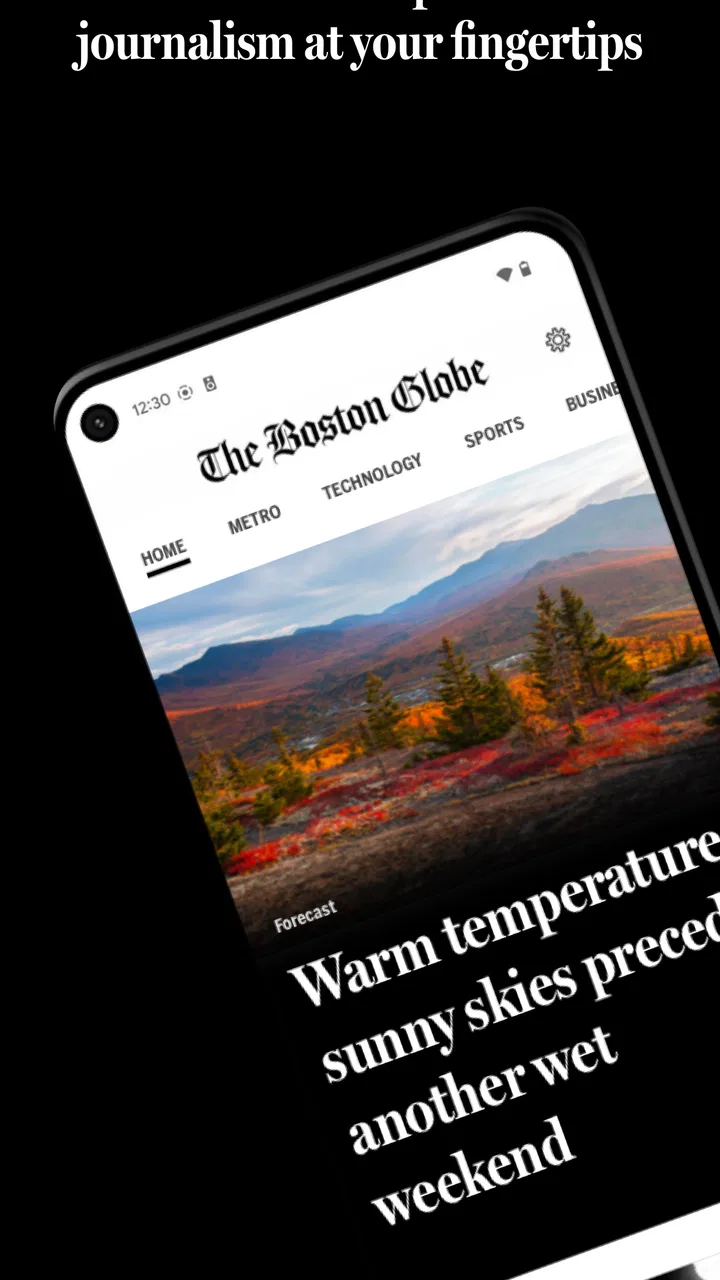
I found The Boston Globe most useful when I wanted a focused way to keep up with Boston-area reporting without opening a general social feed first. It is a free News & Magazines app from Boston Globe Media Partners, LLC, with a clear purpose: put the newspaper’s journalism on a phone or tablet in a format that is easier to return to throughout the day. My experience was less about flashy extras and more about whether the app made reading feel direct, dependable, and comfortable.
That distinction matters. A newspaper app is not competing only with other publications. It is also competing with a browser bookmark, email newsletters, search results, social platforms, and the habit of checking headlines through a phone’s default news tools. The Boston Globe earns a place on my device when I want the publication itself rather than a mixed stream of links. It is especially appealing to readers who already recognize the Globe’s reporting and prefer a dedicated reading environment.
How The Boston Globe feels during everyday reading
I find the everyday experience easiest to judge by the small decisions it supports: whether I can make a quick check-in, choose one story, and stop without being pulled into a sprawling feed. The next section looks at how opening and moving through the app shapes that routine, including the moments when connection quality or a busy phone can change the pace.
You May Also Like

 Blood Strike: 2.5 Anniversary
Blood Strike’s Loadouts Turn Every Drop Into a Tactical Gamble
A close look at Blood Strike’s custom loadouts: how fast access to signature weapons reshapes its battle royale rhythm, rewards preparation, and narrows the gap between fights.

 Pandora - Music & Podcasts
Pandora’s Music Is Easy to Start, but Harder to Recover
Pandora’s strength is its low-effort path from a seed to a station. Its weak spot is how much confidence it asks you to place in connection, setup, and quiet recovery.

 8 Ball Pool
 Is Built on Rivalries, Rematches, and Routine
A close look at the rivalries, rematches, shared routines, and unanswered safety questions that turn a quick pool match into a persistent mobile community.

 Samsung Music
’s Quiet Strength Is Playing What You Already Own
Its reach comes less from spectacle than from dependable access to a personal library. That simplicity is both the app’s strongest retention engine and its ceiling.

 AccuWeather: Weather Radar
AccuWeather Review: A Quick, Clear Forecast for Everyday Decisions
For everyday plans, the best forecast is the one you can understand quickly. AccuWeather makes rain timing, radar, and local conditions easy to act on, with a few trade-offs.

 Hill Climb Racing
Why Hill Climb Racing Still Turns Crashes Into One More Run
A tiny car, a bumpy hill and one more upgrade: Hill Climb Racing keeps resurfacing because its simple chaos makes every near-miss feel personal.
More From Our News Desk



Speed expectations when opening the app
The first thing I look for in a news app is whether it gets me to useful reading quickly. The Boston Globe has a straightforward identity, so I do not spend time figuring out what kind of service I am using. I can approach it with a simple routine: open it during breakfast, scan the main coverage, choose one article, and come back later when I have a few more minutes.
Perceived speed depends heavily on the device, connection, and amount of content being loaded. I would not judge the app by expecting every article or image to appear instantly in every situation. On a strong connection, the experience feels suited to short check-ins. On a weaker connection, the practical approach is to give the initial screen a moment rather than repeatedly closing and reopening it. That small habit avoids turning a temporary delay into a frustrating loop.
The current release is version 5.0.9, and the app supports devices running Android 8.0 or later. Those requirements make it accessible to many existing Android users, although an older phone may feel less immediate than a newer one when switching between reading and other tasks. I would keep the operating system updated where possible, not because this guarantees a particular speed, but because news reading is more pleasant when the device itself is in good condition.
One useful way to think about performance is reading rhythm rather than launch time alone. An app can open quickly and still feel slow if article transitions are awkward, while a slightly heavier opening can be acceptable if the rest of a session is stable. For me, the Globe works best when treated as a dedicated reading stop, not as something I constantly refresh every few seconds.
What happens during heavier reading sessions
Heavy use for this app is not the same as heavy use for a game or video editor. The demanding moments are more likely to come from moving through several stories, loading photographs, leaving the app for another task, and returning later. A long reading session can also expose small annoyances that are invisible during a quick headline check, such as losing your place or needing to wait for a page to settle before continuing.
I recommend a simple workflow for busy mornings. Start with the main screen, choose the stories that genuinely matter to you, and avoid opening every headline in separate browser tabs. That keeps the app’s role clear and reduces the clutter that often makes mobile news reading feel slower than it needs to be. If I know I have only a few minutes, I read one substantial article rather than trying to consume the entire news cycle.
The app is also better suited to deliberate reading than to endless rapid-fire scanning. That is an important trade-off. A broad news aggregator may expose more sources in less time, but its stream can be noisier and less consistent. The Globe gives me a more publication-centered experience, which is valuable when I want context and continuity rather than a collection of unrelated headlines.
For commuters or readers moving between Wi-Fi and mobile data, the sensible expectation is that performance can vary. I would open important stories before entering a poor-signal area instead of assuming every page will behave identically offline. This is not a criticism unique to the Globe; it is simply a realistic limitation of reading current journalism through a connected app. If uninterrupted access during travel is your main priority, a service built around clearly advertised offline reading may suit you better.
Another practical consideration is attention. The app’s value rises when I use it to make a small reading plan: local news first, then subjects I follow, then one deeper piece if time allows. That approach makes the experience feel lighter because I am choosing what to read instead of reacting to every possible update. It is one of the more useful habits I would recommend to someone installing it for the first time.
Reliability and recovering from interruptions
Reliability in a news app means more than avoiding crashes. I also want the app to recover sensibly after a short interruption, a network change, or an accidental trip to another application. The Boston Globe is most convincing when it behaves like a dependable reading shelf: I open it, find the publication’s latest material, and continue without having to rebuild my routine every time.
Still, no mobile reading session is completely isolated from the phone’s operating system. Android may pause background activity, the network may change, or the device may reclaim memory when several apps are open. If the app returns to a loading state after a long interruption, my first response would be to check the connection and retry once rather than repeatedly tapping controls. That is a small recovery tip, but it prevents unnecessary confusion.
I also prefer closing only what is causing trouble. If an article seems slow after moving from Wi-Fi to mobile data, switching connections or reopening that particular screen is more sensible than immediately uninstalling the app. A full restart is a reasonable next step when the entire application stops responding, but it should not be the first reaction to every delayed image or page.
The app’s reputation gives prospective users some useful context: it holds an average rating of 4.6 from around 1.1 thousand ratings, and there are over 300 written reviews. Those figures suggest that many readers are satisfied enough to rate it positively, but they do not guarantee an identical experience on every phone. I treat ratings as a starting signal, then consider whether the app matches my reading habits and device age.
Its audience size is also notable, with over 100 thousand installs. That makes it feel like an established publication app rather than an obscure experiment, while still keeping the experience more specialized than the largest general news platforms. I would not interpret that reach as proof that every feature is perfect. It simply reassures me that the app has a meaningful readership and a clear place in the news ecosystem.
Device constraints and the cost of convenience
The Boston Globe is free to install, which makes trying it low risk. However, the reading experience should be considered alongside the app’s commercial model: in-app purchases are listed at $29.99 per item. For me, that means I would pay attention to what is available before committing to a purchase and decide whether the Globe’s journalism is important enough to justify it. A free download does not automatically mean every part of the publication experience is free.
This is where the app may not be right for everyone. If you want one place containing many publishers, a general aggregator can be more economical and convenient. If you mainly want quick headlines with minimal reading, a lightweight news widget may be a better match. The Globe makes more sense for someone who values this specific newspaper and is willing to consider its paid reading options rather than treating it as an unlimited free headline feed.
Screen size changes the feel of the app as well. On a phone, I prefer short sessions and readable article sections; on a larger device, longer stories are naturally more comfortable. An older handset with limited storage or memory may also make any media-rich news experience feel less relaxed. I would leave enough free space for normal app updates and avoid judging the application while many unrelated apps are competing for the device’s attention.
The age rating is Everyone 10+, so families should still use ordinary judgment about which news stories are appropriate for younger readers. News can cover difficult events even when an app is not designed as an adult-only product. I would not hand the app to a child without talking about the kind of journalism they may encounter, especially if they are browsing independently.
Battery use is difficult to separate from the phone’s general news-reading habits. Images, frequent refreshes, and a long session can naturally consume more resources than reading a short text message. My practical advice is to avoid constant refreshing and to read in batches. That gives the app a fairer chance to feel efficient and also makes the news less distracting.
Who gets the most from this app
The strongest match is a reader who wants a dedicated connection to The Boston Globe’s journalism. That could be someone living in Boston, someone with family or professional interests in the area, or a former local resident who wants a familiar publication while living elsewhere. The app is also useful for readers who dislike the unpredictability of social timelines and would rather begin with a newspaper’s editorial focus.
A realistic everyday scenario would be checking the app before work, reading one local story during a coffee break, and returning in the evening for a longer article. In that pattern, the app does not need to dominate the day. It simply becomes a reliable doorway to selected reporting. I find that more sustainable than opening a general feed whenever I feel bored and ending up with a scattered mix of headlines.
It is less suitable for someone who expects every story from every outlet, wants a highly customizable dashboard, or refuses any possibility of in-app payment. Those readers may prefer a news aggregator, a browser-based collection of free sources, or a publication with a different subscription approach. Choosing the Globe is partly a choice about editorial identity, not just software convenience.
One non-obvious benefit is that a dedicated publication app can improve source awareness. When I read through one recognizable newsroom rather than a stream of reposted links, I have a clearer sense of where the reporting originates. That does not mean I should stop comparing viewpoints, but it does make it easier to distinguish reading a publication from merely consuming whatever an algorithm places in front of me.
Another useful trade-off is focus versus breadth. The Globe can reduce the mental effort of sorting through a huge number of sources, but that same focus may feel narrow if my interests are national or international rather than regional. I would use it alongside another source when I need broad coverage, not pretend that one newspaper app can replace the entire news landscape.
My performance verdict after weighing the compromises
My overall impression is that The Boston Globe is a sensible choice for readers who want a publication-specific news app and value a calmer, more intentional reading routine. Its strongest quality is not a novelty feature; it is the clarity of its purpose. The app puts the Globe’s journalism at the center, and that makes it easier to build a repeatable habit around the stories I actually want to read.
Performance expectations should remain realistic. The app’s feel will depend on the Android device, connection quality, screen size, and how long the session lasts. I would not install it expecting the same instant response from an older phone that I get from a newer one, nor would I rely on any connected news app as my only source during a trip through unreliable service.
The free installation makes experimentation easy, while the $29.99 in-app purchase price means I would review the available payment choices carefully before spending money. That is the central practical question for many people: not whether the app can deliver headlines, but whether this particular publication is worth making part of their regular media budget.
For my use, the answer is yes when I want focused Globe coverage, a dedicated reading space, and a more deliberate alternative to a noisy aggregator. I would skip it if my priority were unlimited multi-source discovery, minimal data use, or completely free access to every article. In short, The Boston Globe is best viewed as a focused newspaper companion: not the universal answer for news, but a credible and convenient fit for readers who specifically want Boston Globe journalism on Android.
FAQs for The Boston Globe
01What is The Boston Globe app?
The Boston Globe app is the mobile edition of the newspaper, offering access to local Boston and New England reporting, national and international news, politics, business, sports, culture, opinion, and more. After installing it, readers can browse a personalized news feed, open full articles, save stories, and receive notifications about important updates, depending on their subscription and device settings.
02Is a subscription required to read The Boston Globe app?
The app can usually be downloaded for free, but full access to many articles and features may require a paid Boston Globe subscription. Some stories or previews may be available without signing in, while subscribers can unlock broader content after logging into their account. Subscription prices, introductory offers, and access rules can change, so check the current terms before subscribing.
03What features does The Boston Globe app offer?
The Boston Globe app is designed for convenient daily reading on a phone or tablet. Depending on the current version, it may include breaking-news alerts, topic navigation, article sharing, saved stories, multimedia content, and a cleaner reading experience than a mobile browser. Users can typically adjust notification preferences and explore sections such as news, sports, opinion, and lifestyle.
04Can I read The Boston Globe offline?
Offline reading availability may depend on the app version, account type, and the specific content feature provided by The Boston Globe. In general, articles need to be loaded while an internet connection is available, and some app editions may support saving or downloading selected content for later use. Confirm the latest in-app options if offline access is important to you.
05Is The Boston Globe app worth downloading?
The app is worth considering if you regularly follow Boston, Massachusetts, or New England news and prefer receiving updates on a mobile device. Its main advantages are convenient access to regional journalism, timely notifications, and organized sections. However, readers should consider the subscription cost, possible paywalls, advertising, and whether the app’s coverage matches their interests before downloading.
Pros
- Clear
- well-researched reporting on Boston and New England communities.
- Strong coverage of local politics
- sports
- business
- and cultural events.
- Clean app design makes browsing articles and sections straightforward.
- Personalized alerts help readers follow breaking stories and selected topics.
- Print subscribers can access digital content through the same account.
Cons
- Most premium articles require a paid subscription after limited access.
- Some features may vary depending on your subscription plan.
- Frequent notifications can feel excessive unless carefully customized.
- Coverage is strongest regionally
- with less depth on international news.
- Certain articles may load slowly on weaker mobile connections.

The Boston Globe
Gallery